Setting yourself up for a week of Delicious Meals

In my last post, I shared what I keep on hand as staples and ways that you can be a little more mindful when shopping. In this post I would like to share some ways to create variety of meals with just spending a little time in the kitchen.

Items referenced in recipe suggestions below: rice, quinoa, butternut squash, carrots, onions, garlic, canned or dried legumes, a whole chicken, pork tenderloin, vegetable stock,  eggs, scallions, frozen peas and carrots, oatmeal, apples, baby spinach or arugula, soy sauce / tamari, toasted sesame oil.

For trying to figure out how much you will need to make, consider a portion to be about ½ cup of cooked grain and ¼ – ½ pound of meat per person. This all depends on your and your family’s appetite.

Try to create a habit of cooking something large that can be eaten in multiple dishes during the week. Cook the double amount of rice, quinoa or other grain to use throughout the week.

 Roast a pan of root vegetables such as butternut squash, sweet potato, carrots and onions for a deliciously sweet side as well as a key star on its own. Just toss with some olive oil and spices of choice. Bake for about ½ hour in a 350 degree oven or until the vegetables are cooked to your liking.

Learn how to spatchcock a whole chicken to cut down on roasting time and it will be so much tastier and juicer than the overcooked rotisserie chicken you pick up in the grocery store. You will have delicious leftovers for salads, sandwiches and stir fries during the week. I like to massage a little olive oil into the skin along with salt, pepper, paprika and top with thinly sliced lemons. I will cook this in a 350 degree oven until juices run clear when slicing into the thickest part of the bird.

A wonderful pork tenderloin is also a versatile meat that can be ready in about a half an hour in a 350 degree oven depending on the size of the tenderloin. You can also slice part of the tenderloin into cutlets and panfry some boneless pork chops or sliced even thinner you can create a scaloppini or schnitzel for some different flavor profiles from the same cut of meat that you purchased!

With the above items prepared you can make your own grain bowl: leftover quinoa, some roasted root vegetables, some roasted chicken, canned beans, freshly chopped greens like arugula, romaine, baby spinach, cilantro and a simple homemade vinaigrette. 

I love to have some easy frozen vegetables on hand when I am short on time or just not want to spend a lot of time in the kitchen. A mixed bag of peas and carrots with some chopped scallion go a long way into making a weeknight vegetable fried rice at home with your leftover rice with a little fried egg on top for some added protein or chop up some roasted chicken or roast pork and toss it with the vegetables and rice to create a chicken fried rice or pork fried rice. Only other things to have on hand would be soy sauce / tamari (gf), toasted sesame oil to put these dishes together and it will be so much better than take out!

You can take those same roasted root vegetables that were a side with your roasted chicken or pork and now combine with a little boxed stock, blitz in a blender or immersion stick blender (my favorite for easy clean up!) and create a warm and creamy soup to bring for an easy work lunch or pair with a nice mixed salad for a light dinner. For added crunch add some toasted pumpkin seeds as garnish before serving.

I like to ensure that I start my day off right and eat a satisfying breakfast that will hold me until lunchtime. Often I will make Baked Apple & Pear Oatmeal (recipe below) or some type of a baked egg dish like a crust-less quiche that I will make with veggies that I have in the fridge or a handful of frozen vegetables and some grated cheese and fresh herbs or a Spanish tortilla. These egg dishes also work well for a lunch or dinner with a little side salad.

I hope that these last two posts have given you some inspiration to get into the kitchen and create some new dishes and some ideas on how to spend your food dollars.

I would love to hear from you as to what you would like me to share as my next topic. Please leave a comment below.  

Eating Healthy and Managing your Food Dollars

Prices seem to be increasing weekly due to supply chain issues and our highest inflation since 1981. It does not feel like our dollars are going as far as they use to. Over the next two posts I would like to share some ways for you to get better use of your food dollars and stretch what you make into more meals with little added effort to ensure that you and your family eat well throughout the week.

Choosing your Food Ingredients…..

When you are grocery shopping, have a plan. I remember my grandparents thoughtfully reviewing the circulars from the grocery stores to see what is on sale and create the weekly menu with these sale items. Look for fruits and vegetables that are in season where you live. These are going to be the most budget friendly as they have a shorter distance to travel to get to your grocery store. It does take a bit more effort than just purchasing and cooking according to the whims of your taste buds which may lead to food waste because of things that were an impulse buy instead of with intention of creating a meal out of it.

The bulk bins of your grocery store in some cases are more reasonable than the prepackaged / boxed goods on the shelves and this also allows you to try smaller portions of grains and legumes than having to buy the prepackaged size.

If you wanted some budget friendly protein, canned beans such as garbanzos, black beans, pinto beans all make delicious add ins for salads, soups or simply seasoned and mixed with a grain for a complete protein.  Buying dried beans are even more economical than canned. It just takes a little more planning when using dried beans and cooking times vary depending on the density of the bean. Split dried legumes cook a little bit quicker. Another great thing that you can do with dried beans is make flour to use when making breads, pancakes and even some sweets.

Sometimes frozen fruits and frozen vegetables can be a deal when shopping. Not only is this produce frozen at peak freshness, they give you a quick way to add more nutrition to your plate with little fuss.

Go visit your local farmer’s market. Many farmers use organic gardening practices, but do not have the money to certify that they are organic. Have a conversation with the farmer and ask them how they grow their produce and tend to the health of their soil. You may even walk away with a new way to prepare an ingredient or be exposed to a vegetable that you have never tried. These fruits and vegetables will offer the most nutrients as they have either been harvested the day before or the day of the market.

I try to consume only organic produce and humanly raised meats that are allowed to spend their days in pastures.  I have found that there are some fruits and vegetables that you do not have to only buy organic as they are treated with little to no pesticides. If you are not aware of the Clean 15 / Dirty Dozen, you should look into the listing that is published each year by the Environmental Working Group. They test and determine which produce has the highest level of contaminates from pesticides. Below for your reference I have provided a shorter version of their 2022 lists.

2022 Dirty Dozen +: The following SHOULD always be purchased organic as conventional grown contain the highest level of pesticides:

  1. Strawberries
  2. Spinach
  3. Kale, Collards, Mustard Greens
  4. Nectarines
  5. Apples
  6. Grapes
  7. Bell and Hot Peppers
  8. Cherries
  9. Peaches
  10. Pears
  11. Celery
  12. Tomatoes
  13. Potatoes
  14. Blueberries

2022 Clean 15: The following it is ok to purchase conventional as they contain little to no pesticides and save yourself a couple of dollars when shopping:

  1. Avocado
  2. Sweet Corn*
  3. Pineapple
  4. Onions
  5. Papaya*
  6. Frozen Sweet Peas
  7. Asparagus
  8. Honeydew melon
  9. Kiwi
  10. Cabbage
  11. Mushrooms
  12. Cantaloupe
  13. Mangoes
  14. Watermelon
  15. Sweet Potatoes

*Small amount of sweet corn, papaya and summer squash sold in the United States is produced from genetically modified seeds. Buy organic varieties of these crops if you want to avoid genetically modified produce.

Gradually put together your pantry staples so that you will always have options to put a quick meal together and think twice about ordering take out.  Think of easy things that you like to make and enjoy eating and build your pantry from there with real ingredients and limit the boxed mac & cheese and ramen noodles.  Below are some of the things that I will have in my fridge and pantry so that I can always put something tasty together with little to no effort.

Shelf stable:

  • An assortment of herbs and spices
  • Rice
  • Quinoa
  • Chia seeds
  • Oatmeal (both rolled & steel cut)
  • Cacao powder
  • Spaghetti and some other shaped pasta
  • Some good jarred marinara
  • An assortment of dried and canned legumes
  • Boxed stock either vegetable or chicken
  • Olive oil
  • Ghee
  • Coconut oil
  • Apple cider vinegar and white vinegar
  • Canned coconut milk
  • Tahini
  • Nut butter
  • Tamari
  • Toasted sesame oil
  • Garlic
  • Onions both white and red
  • Sweet potatoes or white potatoes

In the fridge and freezer:

  • Eggs
  • Butter
  • A chunk of parmigiana reggiano for freshly grated cheese
  • Carrots
  • Celery
  • Lettuce greens or leafy greens (ie: romaine, arugula, spinach, kale, mustard greens, collards….)
  • Scallions
  • Italian Parsley and or cilantro
  • Limes / lemons
  • Fresh ginger
  • Something in the cabbage family (ie:  broccoli, cauliflower, Brussel sprouts, red cabbage, bok choy…..)
  • Apples and other seasonal fruits
  • Flour
  • Whole raw nuts and seeds – almond, walnut, pumpkin, sesame
  • Capers
  • Olives
  • Jam
  • Maple syrup
  • Mayonnaise
  • Grainy mustard
  • Tomato paste
  • Chili garlic sauce
  • Frozen peas and carrots
  • Frozen chopped spinach
  • Frozen broccoli florets
  • Homemade veggie stock
  • Homemade frozen soups and stews

In my next post I will be sharing some fun ways of putting meals together with just a few things to cook in advance.

Baby Steps to Better Nutrition

If I can give you one piece of advice on how to take back your health, I would recommend that you reduce eating “food like substances” that are manufactured and have an almost indefinite shelf life.  The extended shelf life of these products shorten your life.

Make a fist. Take a look at it. That is the size of your stomach. Your entire meal, including liquids should not be more than that size. Pay attention while filling your plate. If eating out, you can always bring home leftovers for another meal. We as a society have a problem with consuming too many calories, both at home and when dining out.                               

When grocery shopping, experiment with fresh seasonal produce and try something new each time you shop. This will keep you from getting bored from eating the same thing each week. Shop at your local farmer’s market. Ask the farmer what their favorite way is to prepare the vegetables that they are selling to give you some fresh ideas.

Experiment with different grains. Rice, quinoa, barley, millet, faro, bulgur, wheat berries, are just few of the favorites that are staples in my pantry to have on hand to create a base for many of the dishes that I make. When cooking grains, always cook more than you need for today’s meal. Leftover grains can be used to create a quick stir fry or added to a soup to give it more heartiness. In the summer, grains make a great base for salads. Add some finely chopped vegetables, fresh herbs and finish with a vinaigrette dressing – a simple yet satisfying meal on a hot summer’s day!

Explore the YouTube or Instagram channels of cooks who post interesting pictures and videos of the foods that they make. Watch cooking shows on PBS. Check out cookbooks from your local library. These are all free resources that only require your time to expand your creativity.

To build your confidence, take a cooking class. Check out your local college continuing education programs. Hire someone (like myself) to provide you with individual instruction so you can become a culinary alchemist. Through learning techniques and practicing, soon you will be able to create all sorts of yummy creations that will impress your friends and family!

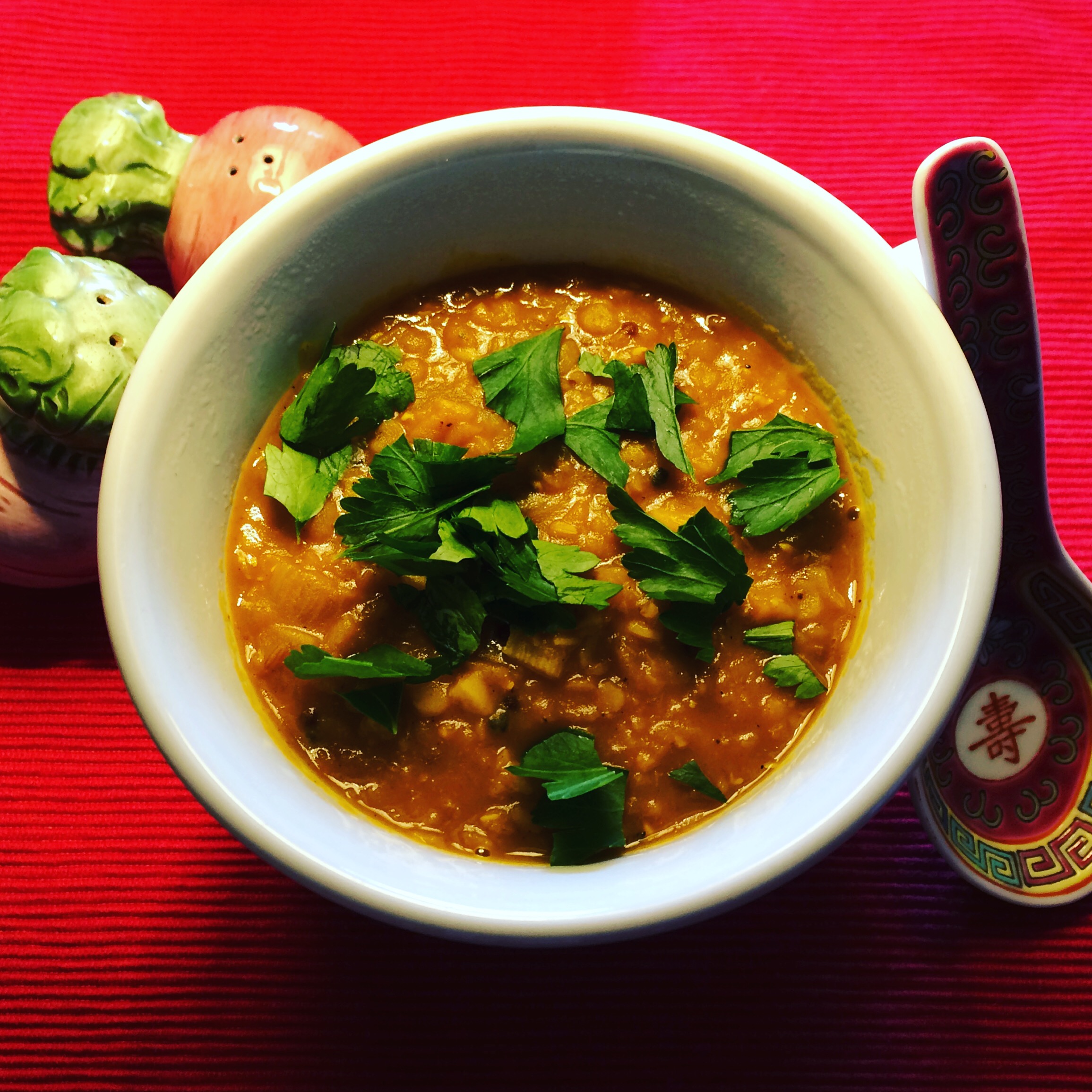
Simple Satisfying Dal. Photo and recipe by Brenda.

Supplements versus Whole Foods – Pt 2

As discussed in my previous post, your best bet to maintaining your health is to eat a whole food diet that covers as many colors of the rainbow to allow you to have all of your necessary nutrients.

“Let food be thy medicine and medicine be thy food.” ― Hippocrates

Today I am going to go over some exceptions for when taking supplements or herbal remedies can be beneficial to balancing your health.

I am a firm believer in prevention and supplement daily with 1000 mg of time released vitamin C to help support my immune system. I also practice a daily routine to ensure that I go to bed and wake up at the same time every day. My food choices for the most part are whole foods which are organic and as close to the grower that I can get.

If you are a vegetarian or vegan you cannot get all of the essential B vitamins in your diet and it would be beneficial to take a complex B vitamin, preferably sublingually.  While there are a certain amount of B vitamins in whole grains, legumes, seeds, nuts, dark leafy greens and fruits, if you are not eating meats, eggs or dairy products you could be deficient in vitamin B12 which is essential for brain and nervous system functioning.

If you feel a cold coming on taking some echinacea, zinc and vitamin C are all helpful with lessening the severity of a cold and give your immunity a little boost. Having a strong immune system is a key to maintaining good health.

For sleeping trouble, you could benefit from sipping an herbal tea before going to bed of passionflower, lemon balm, valerian or chamomile to name a few anxiolytic and hypnotic herbs.  Caution should be taken with chamomile if you have a ragweed allergy as it could cause an adverse reaction within your body. When taking these herbs to get sleep, one should also investigate the underlying cause of insomnia and work to find ways to manage it and reset your internal circadian rhythm. 

Traveling can wreak havoc on our circadian rhythm for both sleep and digestion. When traveling sometime things get backed up and we can get uncomfortable. Relief can be found utilizing aloe vera, slippery elm or psyllium as a laxative to get things moving again. One should take caution with psyllium as this herb also helps with symptoms of diarrhea! If not consuming enough water while taking this herb, you could exacerbate your constipation instead of feeling better.

Herbs and supplements have their place in our lives, but should not be used as a crutch for poor dietary choices.

Supplements versus Whole Foods – Part 1

It is estimated that 75% of Americans take some type of supplement in the form of vitamins, minerals, specialty supplements, herbs / botanicals, sports nutrition or weight loss formulas. This is a $30.7 billion dollar industry that continues to grow as people try to retake control of their health.

Eating food with limited nutritional value and taking vitamins to balance poor foods choices is not a way to manage your health.

There is so much emphasis placed on key nutrients that consumers feel the need to take supplements to ensure that they are getting the proper nutrients.

In this post and my next one, I am hoping to simplify some information so that you can make a more informed decision as to whether or not you need to supplement your diet.

 “When diet is wrong, medicine is of no use. When diet is correct, medicine is of no need.”—Ayurvedic proverb

When we isolate a nutrient from the food, such as Magnesium (which is found in legumes, nuts, seeds, leafy greens and delicious dark chocolate to name a few sources) we lose the benefit of the fiber and other nutrients. The body has a harder time knowing what to do when you only give it a magnesium capsule. If you provide the body with foods that are rich in magnesium it can properly process and use it to fuel and nourish the body’s tissues.

Taking supplements has become a careless pastime of many people. Without understanding the maximum Recommended Daily Intake (RDI) that one should take in a day can lead to build up of that vitamin or mineral in the fatty tissue of the body’s organs, cause intestinal discomfort or just create really expensive urine!

Is taking supplements an easy out for better nutrition?

By taking supplements and relying on them to serve as nourishment for your bodily tissues you are depriving your body of being able to function as it is supposed to.  Supplements do not satiate the body’s need for good quality food.  

We have become a society that wants to rely on pills instead of taking back that beautiful connection that we use to have with food and being able to intuitively understand what our body needs to function efficiently.

Learn what foods are best for your constitution and condition you are trying to manage. Be present when preparing meals for yourself and your family. See if you can incorporate all the colors of the rainbow, almost a guaranteed way to ensure you are getting all of your vitamins and minerals naturally through whole food.

In my next post I will discuss when taking supplements for a short period of time or under certain circumstances can be helpful to maintain your health.