Setting yourself up for a week of Delicious Meals

In my last post, I shared what I keep on hand as staples and ways that you can be a little more mindful when shopping. In this post I would like to share some ways to create variety of meals with just spending a little time in the kitchen.

Items referenced in recipe suggestions below: rice, quinoa, butternut squash, carrots, onions, garlic, canned or dried legumes, a whole chicken, pork tenderloin, vegetable stock,  eggs, scallions, frozen peas and carrots, oatmeal, apples, baby spinach or arugula, soy sauce / tamari, toasted sesame oil.

For trying to figure out how much you will need to make, consider a portion to be about ½ cup of cooked grain and ¼ – ½ pound of meat per person. This all depends on your and your family’s appetite.

Try to create a habit of cooking something large that can be eaten in multiple dishes during the week. Cook the double amount of rice, quinoa or other grain to use throughout the week.

 Roast a pan of root vegetables such as butternut squash, sweet potato, carrots and onions for a deliciously sweet side as well as a key star on its own. Just toss with some olive oil and spices of choice. Bake for about ½ hour in a 350 degree oven or until the vegetables are cooked to your liking.

Learn how to spatchcock a whole chicken to cut down on roasting time and it will be so much tastier and juicer than the overcooked rotisserie chicken you pick up in the grocery store. You will have delicious leftovers for salads, sandwiches and stir fries during the week. I like to massage a little olive oil into the skin along with salt, pepper, paprika and top with thinly sliced lemons. I will cook this in a 350 degree oven until juices run clear when slicing into the thickest part of the bird.

A wonderful pork tenderloin is also a versatile meat that can be ready in about a half an hour in a 350 degree oven depending on the size of the tenderloin. You can also slice part of the tenderloin into cutlets and panfry some boneless pork chops or sliced even thinner you can create a scaloppini or schnitzel for some different flavor profiles from the same cut of meat that you purchased!

With the above items prepared you can make your own grain bowl: leftover quinoa, some roasted root vegetables, some roasted chicken, canned beans, freshly chopped greens like arugula, romaine, baby spinach, cilantro and a simple homemade vinaigrette. 

I love to have some easy frozen vegetables on hand when I am short on time or just not want to spend a lot of time in the kitchen. A mixed bag of peas and carrots with some chopped scallion go a long way into making a weeknight vegetable fried rice at home with your leftover rice with a little fried egg on top for some added protein or chop up some roasted chicken or roast pork and toss it with the vegetables and rice to create a chicken fried rice or pork fried rice. Only other things to have on hand would be soy sauce / tamari (gf), toasted sesame oil to put these dishes together and it will be so much better than take out!

You can take those same roasted root vegetables that were a side with your roasted chicken or pork and now combine with a little boxed stock, blitz in a blender or immersion stick blender (my favorite for easy clean up!) and create a warm and creamy soup to bring for an easy work lunch or pair with a nice mixed salad for a light dinner. For added crunch add some toasted pumpkin seeds as garnish before serving.

I like to ensure that I start my day off right and eat a satisfying breakfast that will hold me until lunchtime. Often I will make Baked Apple & Pear Oatmeal (recipe below) or some type of a baked egg dish like a crust-less quiche that I will make with veggies that I have in the fridge or a handful of frozen vegetables and some grated cheese and fresh herbs or a Spanish tortilla. These egg dishes also work well for a lunch or dinner with a little side salad.

I hope that these last two posts have given you some inspiration to get into the kitchen and create some new dishes and some ideas on how to spend your food dollars.

I would love to hear from you as to what you would like me to share as my next topic. Please leave a comment below.  

Eating Healthy and Managing your Food Dollars

Prices seem to be increasing weekly due to supply chain issues and our highest inflation since 1981. It does not feel like our dollars are going as far as they use to. Over the next two posts I would like to share some ways for you to get better use of your food dollars and stretch what you make into more meals with little added effort to ensure that you and your family eat well throughout the week.

Choosing your Food Ingredients…..

When you are grocery shopping, have a plan. I remember my grandparents thoughtfully reviewing the circulars from the grocery stores to see what is on sale and create the weekly menu with these sale items. Look for fruits and vegetables that are in season where you live. These are going to be the most budget friendly as they have a shorter distance to travel to get to your grocery store. It does take a bit more effort than just purchasing and cooking according to the whims of your taste buds which may lead to food waste because of things that were an impulse buy instead of with intention of creating a meal out of it.

The bulk bins of your grocery store in some cases are more reasonable than the prepackaged / boxed goods on the shelves and this also allows you to try smaller portions of grains and legumes than having to buy the prepackaged size.

If you wanted some budget friendly protein, canned beans such as garbanzos, black beans, pinto beans all make delicious add ins for salads, soups or simply seasoned and mixed with a grain for a complete protein.  Buying dried beans are even more economical than canned. It just takes a little more planning when using dried beans and cooking times vary depending on the density of the bean. Split dried legumes cook a little bit quicker. Another great thing that you can do with dried beans is make flour to use when making breads, pancakes and even some sweets.

Sometimes frozen fruits and frozen vegetables can be a deal when shopping. Not only is this produce frozen at peak freshness, they give you a quick way to add more nutrition to your plate with little fuss.

Go visit your local farmer’s market. Many farmers use organic gardening practices, but do not have the money to certify that they are organic. Have a conversation with the farmer and ask them how they grow their produce and tend to the health of their soil. You may even walk away with a new way to prepare an ingredient or be exposed to a vegetable that you have never tried. These fruits and vegetables will offer the most nutrients as they have either been harvested the day before or the day of the market.

I try to consume only organic produce and humanly raised meats that are allowed to spend their days in pastures.  I have found that there are some fruits and vegetables that you do not have to only buy organic as they are treated with little to no pesticides. If you are not aware of the Clean 15 / Dirty Dozen, you should look into the listing that is published each year by the Environmental Working Group. They test and determine which produce has the highest level of contaminates from pesticides. Below for your reference I have provided a shorter version of their 2022 lists.

2022 Dirty Dozen +: The following SHOULD always be purchased organic as conventional grown contain the highest level of pesticides:

  1. Strawberries
  2. Spinach
  3. Kale, Collards, Mustard Greens
  4. Nectarines
  5. Apples
  6. Grapes
  7. Bell and Hot Peppers
  8. Cherries
  9. Peaches
  10. Pears
  11. Celery
  12. Tomatoes
  13. Potatoes
  14. Blueberries

2022 Clean 15: The following it is ok to purchase conventional as they contain little to no pesticides and save yourself a couple of dollars when shopping:

  1. Avocado
  2. Sweet Corn*
  3. Pineapple
  4. Onions
  5. Papaya*
  6. Frozen Sweet Peas
  7. Asparagus
  8. Honeydew melon
  9. Kiwi
  10. Cabbage
  11. Mushrooms
  12. Cantaloupe
  13. Mangoes
  14. Watermelon
  15. Sweet Potatoes

*Small amount of sweet corn, papaya and summer squash sold in the United States is produced from genetically modified seeds. Buy organic varieties of these crops if you want to avoid genetically modified produce.

Gradually put together your pantry staples so that you will always have options to put a quick meal together and think twice about ordering take out.  Think of easy things that you like to make and enjoy eating and build your pantry from there with real ingredients and limit the boxed mac & cheese and ramen noodles.  Below are some of the things that I will have in my fridge and pantry so that I can always put something tasty together with little to no effort.

Shelf stable:

  • An assortment of herbs and spices
  • Rice
  • Quinoa
  • Chia seeds
  • Oatmeal (both rolled & steel cut)
  • Cacao powder
  • Spaghetti and some other shaped pasta
  • Some good jarred marinara
  • An assortment of dried and canned legumes
  • Boxed stock either vegetable or chicken
  • Olive oil
  • Ghee
  • Coconut oil
  • Apple cider vinegar and white vinegar
  • Canned coconut milk
  • Tahini
  • Nut butter
  • Tamari
  • Toasted sesame oil
  • Garlic
  • Onions both white and red
  • Sweet potatoes or white potatoes

In the fridge and freezer:

  • Eggs
  • Butter
  • A chunk of parmigiana reggiano for freshly grated cheese
  • Carrots
  • Celery
  • Lettuce greens or leafy greens (ie: romaine, arugula, spinach, kale, mustard greens, collards….)
  • Scallions
  • Italian Parsley and or cilantro
  • Limes / lemons
  • Fresh ginger
  • Something in the cabbage family (ie:  broccoli, cauliflower, Brussel sprouts, red cabbage, bok choy…..)
  • Apples and other seasonal fruits
  • Flour
  • Whole raw nuts and seeds – almond, walnut, pumpkin, sesame
  • Capers
  • Olives
  • Jam
  • Maple syrup
  • Mayonnaise
  • Grainy mustard
  • Tomato paste
  • Chili garlic sauce
  • Frozen peas and carrots
  • Frozen chopped spinach
  • Frozen broccoli florets
  • Homemade veggie stock
  • Homemade frozen soups and stews

In my next post I will be sharing some fun ways of putting meals together with just a few things to cook in advance.

EYE HEALTH

Recently I had my annual eye examination and my eye doctor was promoting a dietary supplement for the maintenance of eye health. She did not ask me anything about my diet and just stated that I could not get enough of these nutrients in my diet. Being a clinical herbalist and Ayurvedic wellness counselor, I know full well that my diet probably covers these vitamins and nutrients, I just smiled and let her provide me with the brochure for the product that she was promoting.  

That appointment did get me thinking: How can I better nourish and care for my eyes to keep them healthy and to slow down any further deterioration?

Today I would like to share with you some ways to nourish and protect your eye health focusing on a couple of vitamins and some practices for you to incorporate into your daily routine.

Vitamin A is important for maintaining eye health by reducing night blindness as well as age related macular degeneration. The recommended daily allowance (RDA) is 700-900 mcg for adults. Some very good food sources to get vitamin A in your diet are: cooked sweet potato, cooked winter squash, cooked kale, collards and other dark leafy greens, carrots, mangos and papaya. For a point of reference, 1 cup of cooked sweet potato provides us with over 1800 mcg of vitamin A.

Lutein & Zeaxanthin are helpful in reducing the risk of chronic eye diseases such as age related macular degeneration, cataracts and protects the eyes from the ultra violet rays of the sun. The recommended daily allowance (RDA) is 10 mg for lutein and 2 mg for zeaxanthin. Good food sources to achieve this in your daily diet is through the consumption of cooked spinach and other dark leafy greens, cooked squashes like zucchini and pumpkin, broccoli and Brussel sprouts, asparagus and carrots. And here as reference 1 cup of cooked spinach provides us with over 20 mg of lutein and zeaxanthin.

For me it is easy-peasy to get these nutrients into my diet as I eat mostly fresh organic plants and whole grains. If you are new to eating real whole foods and want to check out your foods nutrients, I found a fun interactive website: https://myfooddata.com/ that you may enjoy exploring.

When our eyes get tired and strained it is our body’s signal that we need to stop staring at our screens or books. Take a little break. Get up from your desk, stretch, go make a cup of herbal tea, take a short walk outside, refresh your eyes simply by spritzing our eyes with a little rosewater, closing your eyes and cover with cucumber slices for 10-15 minutes.

When being outdoors to avoid the damaging rays of the sun, one should always wear good quality sunglasses and avoid squinting. If you are wearing sunglasses and you are still squinting from the brightness, you should find darker sunglasses that will help your eyes from straining. If nothing more than vanity, squinting gives you wrinkles around your eyes and who needs more wrinkles?

Ayurveda recommends performing eye exercises to strengthen our eyes which do not require any special equipment and will help with the flexibility and strength of the eye muscles. One practice is staring at the flame of a ghee lamp (or taper candle) for as long as you can tolerate it without blinking and then looking at an object in the distance. Finish by rubbing your palms together to warm them and gently place over your closed eyes. Another practice is rolling your eyes clockwise / counterclockwise several times and when your eye muscles start to feel strained, again rub your palms together and gently cover your closed eyes for several minutes or cover your eyes with a warm compress and allow the eyes to rest in the darkness for several minutes.

Dry eyes are a common complaint these days. Simple ways to relieve dry eye are again to take a break from your desk or screen, spritz your eyes with rosewater, ensure that you are drinking enough water each day. Consuming only coffee and tea can be very drying to the body. Ensure that your diet contains omega 3 fatty acids. Have a Netra basti treatment. Netra means eye and is best performed by a qualified Ayurvedic practitioner who first places a dough ring around each of your eyes that creates a sealed barrier to the skin to allow the pouring of warm ghee into the eyes to remain there so the eyes can absorb all the nourishment and oleation into the body. 

Castor oil is a wonderful treatment that you can give yourself as well to treat tired dry eyes. Ensure that the castor oil you use is organic and safe for internal use. Before bed, put a drop of castor oil into each eye and also rub castor oil onto the soles of your feet and put on cotton socks so that the oil will not stain your sheets. You will wake in the morning with fresh and bright eyes and softer feet too!

In summary: eat a diet that is rich in fresh organic vegetables, omega 3 fatty acids, ensure that you do not over strain your eyes, do eye exercises to increase their flexibility and strength and you may be able to help your eyes to stay healthier and not deteriorate due to age related issues.

Be Well!

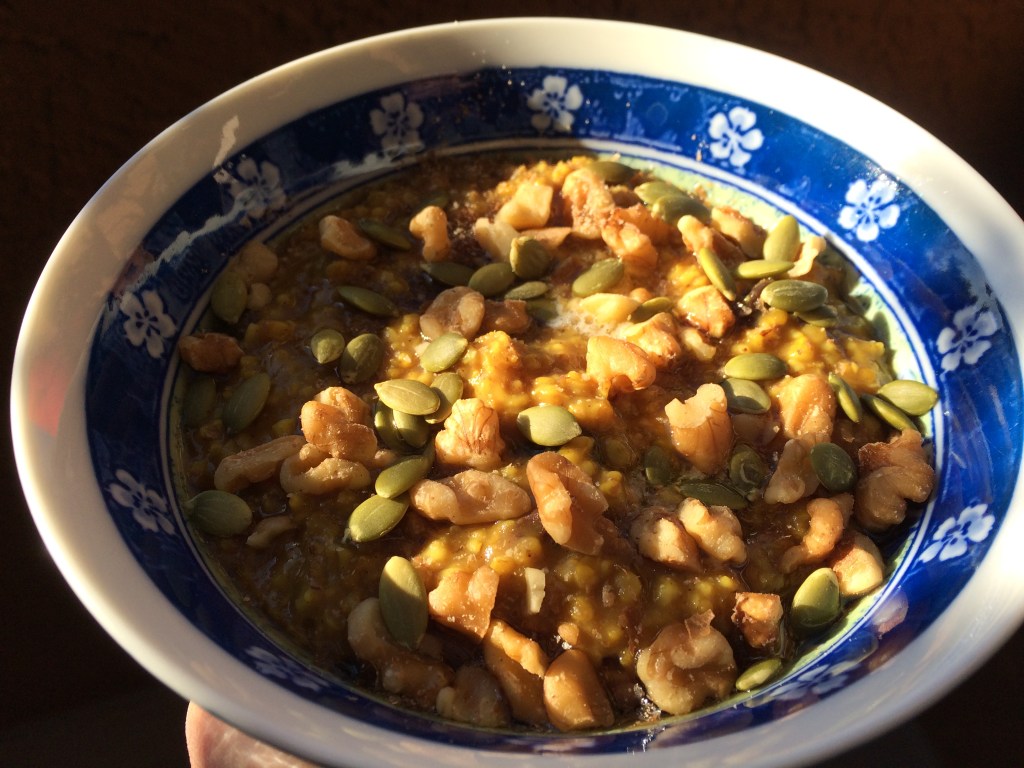
WARM AND FILLING STEEL CUT OATS

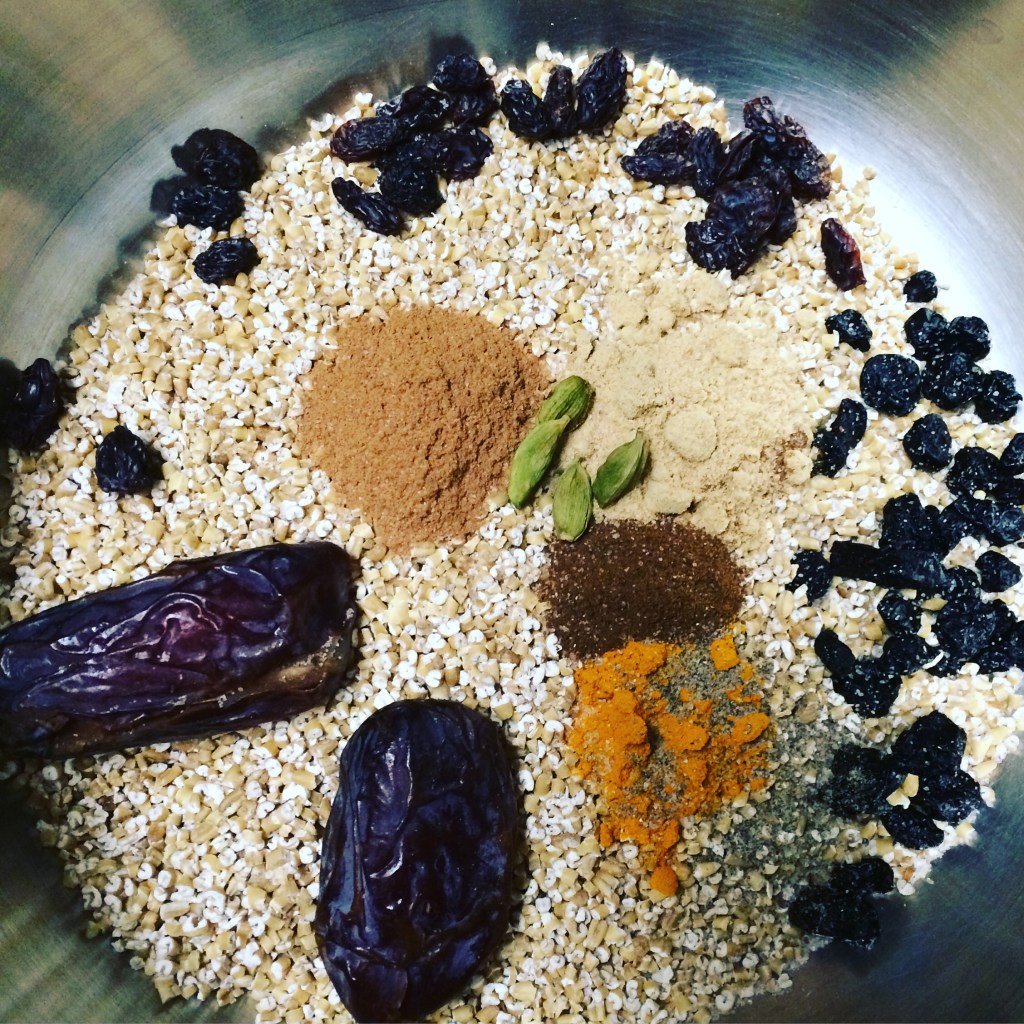
Simple oats fill your body full of energy to take you through to lunchtime. I enjoy making steel cut oats when the weather gets cooler and I feel that I need something warm in my tummy. I find oats on their own to be heavy and rather bland, so when I cook up steel cut oats I love to add warming spices to keep my digestive fire (Agni) stoked. Not only are they good for me, but they add such a delicious aroma to my bowl that it starts my day off with a smile.

“Let food be thy medicine and medicine be thy food.” ― Hippocrates

Here are some of the traditional healing properties of the ingredients that make up this recipe.

Steel cut oats: minimally processed, lower glycemic index than rolled oats, contain more fiber than rolled or quick oats as well as more protein, they are also good for memory and who couldn’t use a little boost to their memory? Oats have a warming thermal energy and help to restore the nervous and reproductive systems, strengthens the spleen-pancreas, removes cholesterol from the digestive tract and arteries and strengthens the cardiac muscles.

Dates: have traditionally been used to break fast during Ramadan. These sweet dried fruits are packed with fiber, potassium, magnesium, copper, manganese, iron, B6 and antioxidants.

Raisons: contain potassium, iron, B6, magnesium and calcium as well as dietary fiber.

Cinnamon: a lovely fragrant warming herb that is antiseptic, antiviral, anti-inflammatory, helps build digestive fire. Cinnamon has an affinity towards the heart, lungs and digestive tract and it helpful in improving circulation, relieving colds and congestion, diarrhea, nausea and vomiting.

Ginger: another fragrant warming herb that acts as an antiseptic, digestive and contains analgesic properties. Ginger has an affinity towards the lungs, kidneys and lymph. It is helpful with digestive issues, circulatory problems, helps to burn toxins in the system with its diaphoretic properties as well as act as a carminative when there is gas and bloating.

Turmeric: earthy golden warming herb that is beneficial for all of the tissues in the body. Among its many health benefits it is anti-inflammatory, anti-microbial, antioxidant, antiviral, immune stimulant, improves circulation and decongests the liver. For the body to metabolize turmeric properly it should be taken with black pepper.

Black pepper: a heating herb that has an affinity towards the respiratory and gastrointestinal tract. It is antipyretic and diaphoretic, analgesic, anti-bacterial, decongestant, antiseptic and detoxifying. Black pepper improves digestion and absorption.

Clove: it has an affinity towards the nervous system, gastrointestinal tract as well as the blood. It is helpful with coughs, colds, congestion, improves digestion and increases Agni.

Cardamom: cooling cardamom has an affinity towards the digestive and respiratory systems. It is a digestive, carminative, anti-emetic, diuretic, analgesic and expectorant. It is helpful with cough, colds, congestion and gingivitis.

Ingredients: 1 cup Steel Cut Oats, 4 cups cool water, 2 pitted dates, 1/8 cup of dried blueberries, 1/8 cup of dried raisons, 1 tsp ground cinnamon, 1 tsp ground ginger, 1 tsp turmeric powder, 1/4 tsp freshly ground black pepper, 1/4 tsp clove powder, 4 cardamom pods.

Instructions: Place all ingredients into a heavy bottomed pot. Bring to a boil. Reduce heat to a simmer and cook for about 30 minutes, stay close by so you can occasionally stir to make sure the oats do not stick to the bottom of the pot and adding a bit more water if necessary to ensure the oats cook to your doneness.

Garnish: pumpkin seeds, walnuts, ghee, maple syrup or just a dusting of cinnamon.

Enjoy and start your day with a happy warm smile!

Fall Allergies

Beautiful glorious goldenrod.

I remember one time when I was young, I proudly returned home after picking a wonderful colorful bouquet of wildflowers from the fields close to home. The star of the bouquet was the beautiful vibrant yellow goldenrod, (Solidago Canadensis). My mother, in the midst of suffering from fall allergies promptly banned my beautiful bouquet from the house as she like others believed that goldenrod was to be blamed for her fall allergies.  At that time she did not know it was ragweed, (Ambrosia), that was her fall arch nemesis. While both plants are in the Asteracea family, only ragweed has pollen that will fly through the air to get into mucosal membranes and cause distress.

For those who suffer with fall allergies, glorious golden rod is an ally not an enemy!

Goldenrod is a very effective mucus cutter, an anti-catarrhal (eliminates mucus conditions). It is also a beautiful natural anti-histamine. I instinctively knew that the plant would be good for my mother, but she was not ready to accept plant medicine!

If goldenrod is available to safely harvest (from a field free of pesticides or roadside pollutants), I might make a tea from the leaves and flowers to help with my congestion. The therapy of inhaling the lovely scent of goldenrod as well as its lovely color brings me joy.  

If goldenrod is not available, I might steep a lovely preparation of:

  1. Thyme with a little honey.
  2. Fresh ginger, cinnamon, licorice.
  3. Freshly grated ginger.
  4. Ginger, clove and cinnamon

For me, the worst part of suffering from allergies are dry, itchy, irritated eyes.  When my eyes get super itchy and dry, which is not only during allergy season but after spending too many hours staring at a computer screen, I love to give them a lovely spray of organic rosewater which imparts some moisture as well as cools the heat on my eyeballs. If that doesn’t provide me with enough temporary relief, I will cut a couple of cucumber slices and place them over my closed eyelids and take a 10-15 minute break from my day. I might also make a triphala tea, strain it very well and pour into my eye cups and rinse my eyes. Once I am done rinsing my eyes I would let my eyes rest for awhile and allow my eyelids enjoy the cooling effects of some cucumber slices. In Ayurveda, a treatment to help with dry eyes and also nourish the eye tissue is called netra basti. To do this treatment one takes a whole wheat ring of dough and place it around the eyes, creating a well and ensure it is sealed to the skin to make it water tight. Then warm ghee is poured into the eyes and you blink your eyes open and closed for a period of time. This is best performed by a practitioner who knows how to safely do this.

If my nose is running and I am coughing up phlegm as my body is trying to eliminate the pollen and other foreign matter from my system, I might add some of the following herbs to my daily routine as a tea or incorporate them into the foods that I am preparing. I would think about pungent foods that disperse mucus, such as: chiles, hot peppers, garlic, onion, turnip, cabbage, ginger, radish. Adding herbs that will act as drying expectorants, such as cardamom, cinnamon, cloves, dry ginger and mustard seed.  To help lungs clear excess mucus, in addition to using the above mentioned foods and herbs, I would add black pepper and thyme to my cooking and perhaps supplementing with trikatu (an Ayurvedic formula for equal parts of dry ginger, black pepper and pippali). If my lungs and throat felt irritated I might add some marshmallow for its soothing demulcent properties. I would also be thinking about foods that I eat for colds and flu.

As always, your best defense in combating allergies, colds, flus and maintaining your vibrant health is to ensure that you are eating a diet that is nutrient dense and limiting your consumption of processed foods, white flour and refined sugar.

Be gentle, kind and loving to your body. It is your home for this lifetime.

The West is Ablaze in Wildfires! ~ Help for your dried irritated respiratory system ~

Flowing Data August 19, 2020

Recently the air quality index here in Albuquerque, New Mexico hit an insane level of 1240 due to all the dust and debris blowing in from all of the wildfires raging across the western United States.

It has been a long hot dry summer and it is probably a good time to talk about foods and herbs that can help soothe and heal an irritated and inflamed respiratory system.

If I have a rough, dry throat that hurts when I swallow, I would look to incorporate some cooling demulcent herbs into my daily routine. Steeping a lovely tea containing a combination of marshmallow, licorice root, slippery elm, lungwort, solomon’s seal or mullein would provide some soothing relief. (Traditional dosing would be 1-2 teaspoons of herbs into a cup of boiling water; allow to steep for about five minutes, strain and add honey if desired for sweetness.) I might make myself a warm salt water gargle to give my throat some love.

Throat soothing teas:

  • Marshmallow, honey & lemon in a cup of hot water.
  • Honey & Lemon syrup: Juice of ½ lemon, ½ – 1 tablespoon local raw honey, 8 oz. hot water. Mix together and drink as often as needed to soothe throat.

If I have inhaled too many irritants that have my bronchi feeling constricted, I would to create some steam inhalation therapy. This not only gives the lungs some moisture, but also your skin. This is one herbal combination that I like to use: 1 tablespoon of crushed fennel seeds, 1 tablespoon of dried peppermint leaves, 1 tablespoon dried elderberry flowers, 2 teaspoons powdered licorice root 1 quart of boiling water. Put all herbs into a heatproof bowl and pour boiling water over them. Put your face about 12 inches away from the water (careful not to scald yourself!) and cover your head with a towel, creating a tent. Inhale deeply for 5-10 minutes and gently pat your skin dry and apply a facial moisturizer to keep your skin’s absorbed moisture from evaporating. You may want to experiment with the herbs that you are drawn to such as camphor, rosemary, lavender, eucalyptus or sage.

If after taking a steam and having a nice cup of tea and the congestion is still there and nothing was moving out of my respiratory system, I might add some moistening expectorants such as bamboo, chickweed, comfrey root, flaxseed, Irish moss, licorice, maiden hair fern, marshmallow, slippery elm or solomon’s seal.

For that annoying pesky cough I might try some cough relieving herbs such as bayberry, eucalyptus, horehound, mullein, osha, thyme, apricot seeds, coltsfoot, grindelia, wild cherry taken as a tea or decoction.

I would make some cayenne and ginger cough syrup: ¼ teaspoon cayenne pepper, ¼ teaspoon ginger (either dried or freshly ground), 1 tablespoon local raw honey, 1 tablespoon apple cider vinegar, 2 tablespoons hot water. Combine ingredients together and take as needed to relieve cough.

With everything feeling raw and sore I might incorporate some mucilaginous foods to help heal the mucosal lining of the lungs like kombu, marshmallow, flaxseed and fenugreek.  

There is your local herb shop for lung support, look for capsules or tinctures that contain any of these combination of herbs:

  • Comfrey, mullein, marshmallow, lobelia, slippery elm
  • Comfrey, fenugreek
  • Marshmallow, mullein, lobelia, chickweed

All of the above combinations have traditionally been used to help expel mucus from the lungs, fight infection and ease chest pain due to cough.

When working with herbs it helps to think about what you are trying to achieve.

For example, Ginger removes mucus through a drying action. Good for a runny nose and coughing up mucus.

Licorice removes mucus through a moistening action. Helpful when there is congestion, but nothing is moving and something that is demulcent will help in getting things out.

To give some love to my overworked nasal mucosal membranes which are desperately trying to keep foreign particles from getting into my system, a daily application of nasaya oil to keep things moist in my nose and to help trap the airborne irritants from getting any farther than my nose.

To help strengthen the lungs, a daily pranayama practice is very important to do. Please see my previous post on how to do alternative nostril breathing.  If that is not your thing try singing loudly and enthusiastically in the shower or while driving your car. Singing exercises and strengthens the lungs.

Food is medicine!

I would incorporate foods to support healthy lung function. Let’s have a diet that is as clean as possible, meaning stay away from processed foods, white sugar and white flour (which even when we are feeling healthy, we should only consume in moderation).

Incorporate fresh juicy vegetables, leafy greens – especially collard, kale, mustard – when you look at are sort of shaped like lung lobes (doctrine of signatures). These green vegetables are important as their levels of chlorophyll have been shown to inhibit viruses and help the lungs dispel the residues of chemicals, smoke inhalation and other toxins.

Dark green, golden and orange vegetables are protective due to their rich beta carotene content. Beta carotene has been found to protect the mucus membranes. Foods rich in beta carotene are carrot, winter squash, pumpkin, broccoli, parsley, kale, turnips, mustard greens.

Eat a diet that is light, warm and simple.  To help with my healing I would make a simple clear vegetable soup that might include kombu, garlic, onion, carrot, mustard greens and a bit of miso.  Or some cooked whole grains with steamed vegetables to which I may add pungent spices if I were looking to dispel mucus from my system. If my lungs felt extra dry, I might add ghee, raw soaked almonds with skins removed, almond milk, tahini or honey.

Don’t forget to drink plenty of water to keep your system hydrated!

Be well!

THE DOG DAYS OF SUMMER

I don’t know about you, but this summer seems to be the hottest that I remember in a long time! People’s emotions are hot and prickly and we could all use a few new ways to cool down both our physical body and to squelch the mental heat and anger that seems to be pervading through society.

If you are easily irritated, you might have some congestion in your liver and could use a little cleanse or nutritional support. I might try either some milk thistle, dandelion or other bitters to cleanse and nourish this hard working organ. I would also cut back on eating fried foods and meats favoring a lighter diet that helps to keep the liver and blood cool.

If you are fortunate enough to live near Asian markets or a well stock green grocer, try adding burdock root (Arctium lappa) to your diet. It is both bitter and cooling and has an affinity towards the kidneys and liver. It acts as an alterative, diuretic and diaphoretic. I love to make Carrot and Burdock Root Kimpira as a light meal and serve it with basmati rice and freshly chopped cilantro.

To cool the physical body I would include hydrophilic fruits and vegetables such as cucumber and watermelon.

Cucumber acts as a refrigerant, alterative and diuretic. Cucumber counteracts the summer heat, clears the skin and promotes fluid elimination.  

Watermelon is a diuretic and refrigerant and helps to treat the discomfort from the heat, mental irritability and helps when retaining fluid.

Both are great for keeping you hydrated when sweating in the heat. They are wonderful just to chop and eat or blend them into a popular drink Aqua Fresca, that we enjoy here in New Mexico.

Some cooling teas for you to make and try: lemon verbena, mint, lemon grass and the gorgeously red and tangy hibiscus.

Lemon Verbena (Aloysia citrodora) is cooling, acts as a digestive soother and is nerve calming.

Mint (Mentha x piperita) Care should be taken not too consume too much as it can lead to adrenal fatigue. It is cooling and can provide a nice pick me up in the afternoon either as a cool or hot tea.

Lemon Grass (Cymbopogon citratus) is a lovely herb that is both a diaphoretic (makes you sweat) and a refrigerant (reduces body temperature.

Hibiscus (Hibiscus rosa sinensis) Being beautifully red in color, it has an affinity towards the blood. Acts as an alterative and refrigerant.

If you enjoy eating raw vegetable salads, it is best to have them at lunch time when your digestion is at its strongest.

While ice cold beverages and ice cream treats are delightful this time of year, enjoy them in moderation as you can put out your digestive fire which can leave you feeling heavy and dull after a meal. Remember that food should always make you feel energized to fuel you for your day and not groggy and ready for a nap.  If your digestion is feeling a bit weak, you may want to take a look at my post on how to rekindle your digestive fire (Agni)

During the summer you will always find rosewater spray in my bag I use to cool myself off after being in the hot desert sun. A lovely mint hydrosol is also a nice remedy to have with you when your temperature starts rising from the hot sun.

Step away from media – not just the news, but also social media that we all get sucked into which just aggravates our minds.

Let go of what you cannot control. It will calm your mind and elevate the aggravation that you are feeling.  If you have trouble, try to learn some mindfulness techniques to help calm the mind.

Experiment with pranayama techniques. There is a beautiful easy cooling breath exercise called “Shilali Breath” which is done curling your tongue like a tube and inhaling your breath to your belly, close your mouth, hold for a few seconds and exhale through your nose.

Until next time BE WELL!

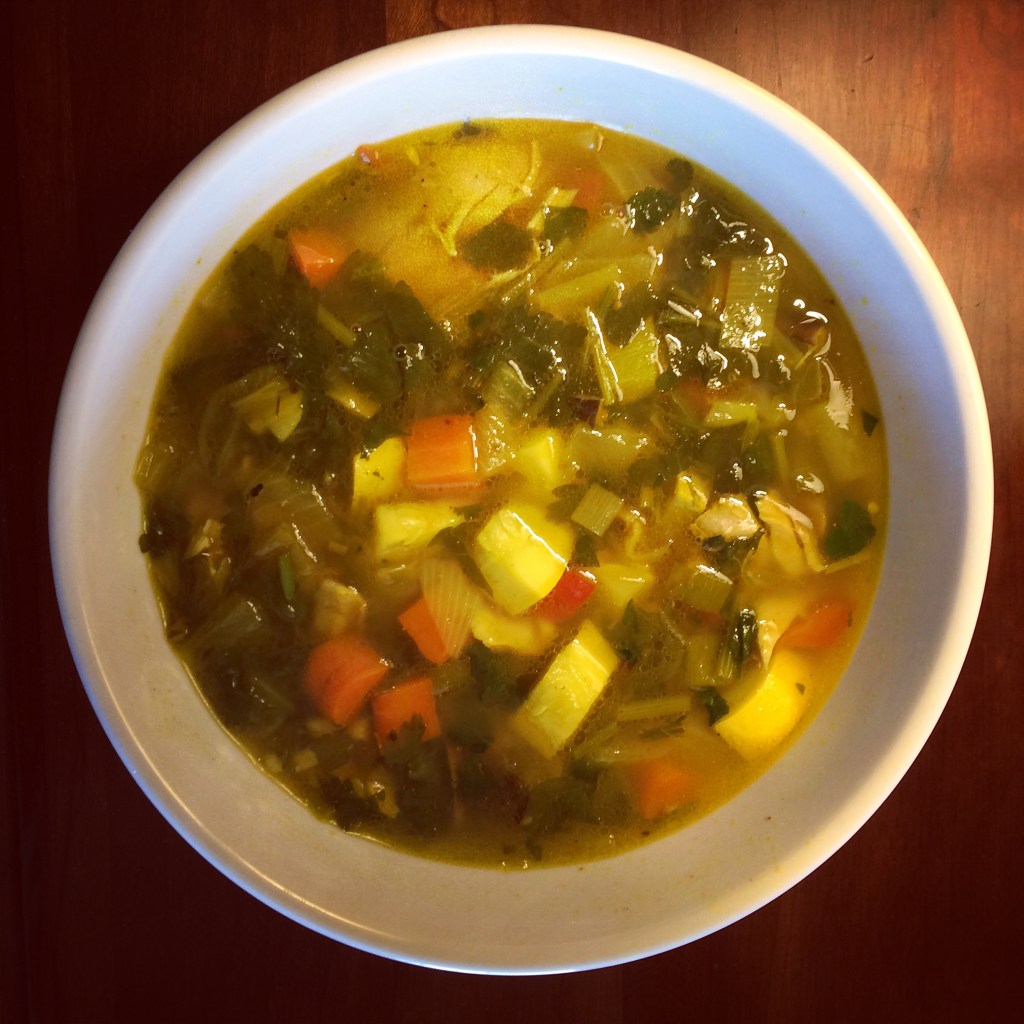
Chicken soup for colds, flu and allergy season!

I love to make this soup whenever I feel a chill in the air or I am starting to feel that I am in need of some TLC. It is warm grounding medicine in a bowl. The chicken soup has healing herbs and spices to nourish your immunity to keep you healthy or support your healing if you are feeling under the weather.

If you are looking for information on some cold and flu remedies, please check out this post.

4-6 chicken thighs bone in with skin removed

Who doesn’t love an aromatic bowl of hot soup?

1 medium onion chopped

2 medium leeks chopped and thoroughly rinsed to remove all sand and grit

2-3 carrots chopped

2 stalks celery chopped

1 red pepper chopped

About 2” piece of fresh ginger finely minced

About 4 cloves of fresh garlic finely minced

6-8 sliced shiitake mushrooms

1 bunch each of Italian parsley, cilantro and dill (chopped including the stems!)

1-2 roasted hatch green chile chopped (it’s a New Mexico thing that is hard to replicate with any other type of chile pepper. You may be able to find canned hatch green chile in your market)

1 small to medium zucchini or yellow squash

4 bay leaves

6 slices of dried Astragulus root

1 Tbs turmeric

1 tsp coriander

1 tsp cumin

1 tsp cardamom

1 tsp fennel

6 whole black pepper corns

6 Sichuan pepper corns

4+ star anise

Salt and fresh ground pepper to taste

Tea kettle of boiling water

Preheat heavy bottomed stock pot over medium heat. Coat inside bottom of pot with olive oil. Add chopped onions and a pinch of salt. Stir and allow to cook until onions are translucent. Add leeks and another pinch of salt, stir and continue to cook until leeks start to wilt. Add chopped carrots, onions, celery, red bell pepper, another pinch of salt and allow to sauté for a few minutes. Add chopped garlic, ginger and shiitake mushrooms. Give a stir and allow to cook for another couple of minutes. Add bay leaves and other herbs stir to coat the vegetable mixture and now add a tea kettle of boiling water. Place chicken pieces in stock and add parsley, cilantro, dill, hatch green chile and zucchini. Give the pot a good stir and bring to a boil. Once boiling reduce heat to simmer and put lid on pot and cook for about 30-45 minutes. Pull chicken from pot, allow to cool enough to handle so you can shred or chop and return to pot. Taste and adjust seasoning to your liking.

Note: remove bay leaves and Astragulus before serving.

Enjoy!

Mighty Mushroom Barley Soup

I love to make this soup on a chilly winter’s day or when I feel like I may be coming down with a cold. It has many immune boosting properties without over taxing your digestion so your body can combat whatever pathogens have entered your system, be it colds, flu or even allergies.

The spices used in this recipe do not just impart flavor, they have medicinal properties as well! 

Rosemary – tonic, stimulant, anti-depressant, diaphoretic, anti-inflammatory, astringent, anti-oxidant, diuretic. Caraway – carminative, expectorant. Cumin – diuretic, febrifuge, alterative. Onion and leek – antioxidant, anti-inflammatory. Fresh garlic – antibiotic, diaphoretic, expectorant, antioxidant, increases circulation, strengthens immunity. Shitake mushrooms – immune stimulant. Astragulus – adaptogen, immune stimulant, diuretic, antiviral tonic. Bay Leaves – bronchodilator. Turmeric – antimicrobial, anti-inflammatory, antioxidant, anti-viral, diuretic, hepatoprotective, immune stimulant. Black Pepper – antipyretic, decongestant, mild pain killer, anti-bacterial, antiseptic, detoxifying, diaphoretic. Barley – cooling thermal nature, light, diuretic.

Ingredients:

1 TBS Rosemary

1 TBS Caraway seeds

1 TBS Cumin seeds

Olive Oil

2 large onions chopped

9 large cloves of garlic chopped

2-3 cups of mushrooms, I used a combination of Shitake and white button mushrooms

6 pieces of Astragulus root

2 Bay leaves

2 tsp Turmeric powder

1 cup of Pearl Barley – rinsed and drained

50 oz. of boiling stock or boiling water

Salt & Pepper

Preparation:

Heat a heavy bottom stock pot over medium heat and gently toast the rosemary, caraway and cumin seeds. Once you begin to smell the spices releasing their fragrant oils, add just olive oil to lightly coat the bottom of the pot. Add chopped onions and a little salt to help the onions sweat out their liquid. Give a stir and cook until the onions become translucent. Add the garlic and cook for about two minutes. Add the mushrooms and a little salt and fresh ground pepper and give everything a stir. Cook for about 5 minutes, stirring occasionally to ensure nothing sticks to the bottoms of the pot. Add barley, bay leaves and turmeric powder ensuring that everything is well mixed together. Add stock or water and bring everything to a boil, reduce heat and cover with lid. Cook for about an hour or until the barley is cooked through. Taste and adjust seasonings to your liking. Remove bay leaves and Astragulus before serving.

Bon Appetite & Be Well!